From index cards to phone and watch: how language learning shaped Lexolotl
Update! Lexolotl is now live on the App Store – Mac, iPad, iPhone (+Apple Watch), Vision Pro
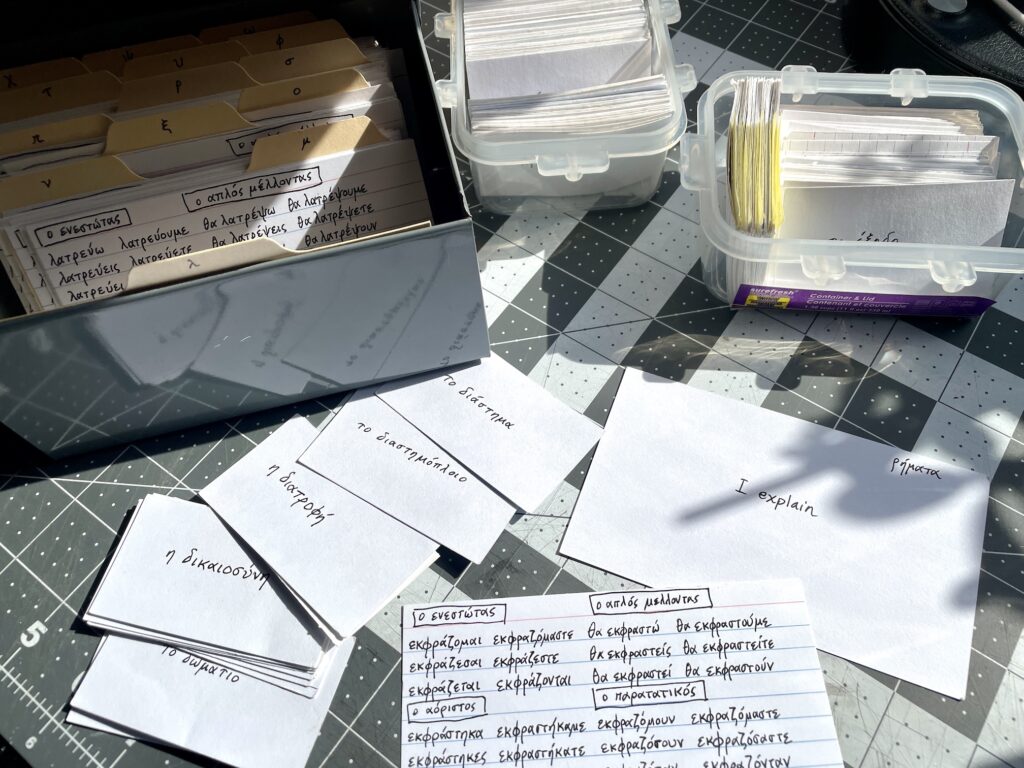
Five years ago I began learning modern Greek. I used a number of online tools, videos, tutorial apps, and online learning communities. It’s a great time to be a language learner! But I also knew that to really master the language I needed old-fashioned repetition, so I got into DIY flashcards.
One thing I loved about making my own flashcards out of index cards was the personal connection to my learning path. Unlike a stock box of pre-packaged cards, every word in my hand-made collection was a noun, adjective, verb, phrase, or pattern I’d actually encountered in lessons and reading. As my decks grew, I could see how my exposure to Greek was growing.
There came a point, though, where my learning started to outgrow the approach. With a few hundred flashcards you can set aside the ones you need more practice on, or take a handful in your pocket to drill on your lunch break. But learning a language can mean learning thousands of words, and I gradually recognized that I needed a better way to manage and keep training my growing vocabulary.
I looked into some vocabulary apps, but they were either too impersonal — stored on the web, some requiring a subscription, hard to build your own custom drills and workflows — or a bit clunky, not quite the interface I wanted.
Being a programmer, I did what a programmer does: I wrote my own focused command-line app, backed by a database on my Mac, that managed a virtual flashcard collection. The system didn’t only give me random drills — it tracked how well I rated my knowledge of each card, so I could later drill just the ones I had a hard time remembering, or review the ones I was supposed to know well. The little app evolved with my language learning. I taught it to run drills in both directions (Greek→English, English→Greek), added a grammar category for every card, and built a system of tags that let me run a drill just for terms related to mythology, or geography, or anything marked for review.
I had started from scratch with a few index-card words, and by the time I passed my B2 certification exam I had my own flashcard database with over 7,000 terms that I drilled from almost daily.
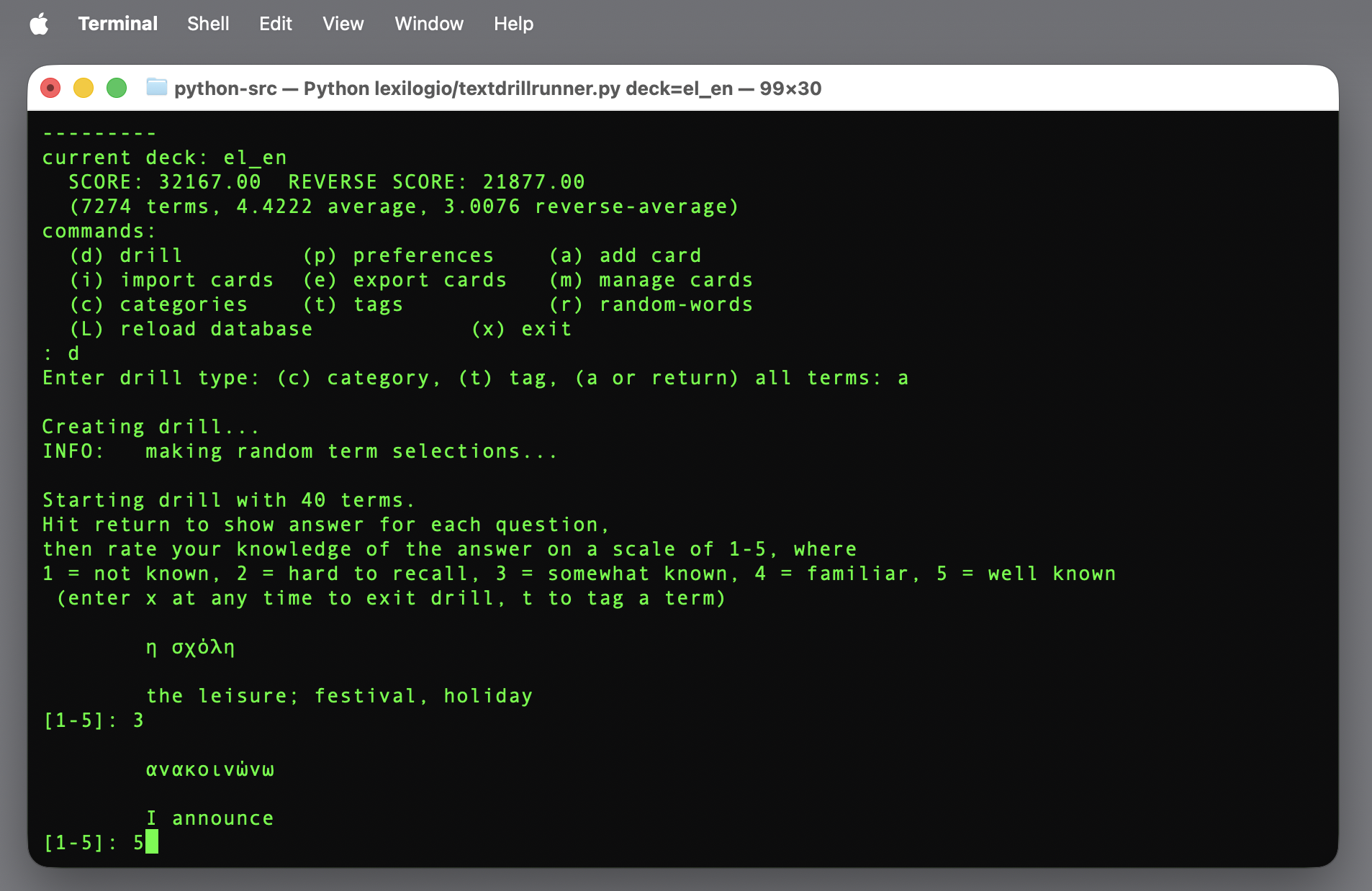
There was just one thing missing from my little terminal app, something I’d had with my early box of paper cards: I couldn’t easily keep a few ‘cards’ from my database in my pocket for idle moments. But I did have an iPhone in my pocket, and an Apple Watch on my wrist. That was the inspiration for Lexolotl: a flashcard app, based on the one I’d been using through my whole language journey, that would run and share data across Mac, iPhone, and Apple Watch. I wanted the power of the 7,000-card database and all the spaced-repetition drill modes I’d worked out, with the portability of the small devices I always have with me.
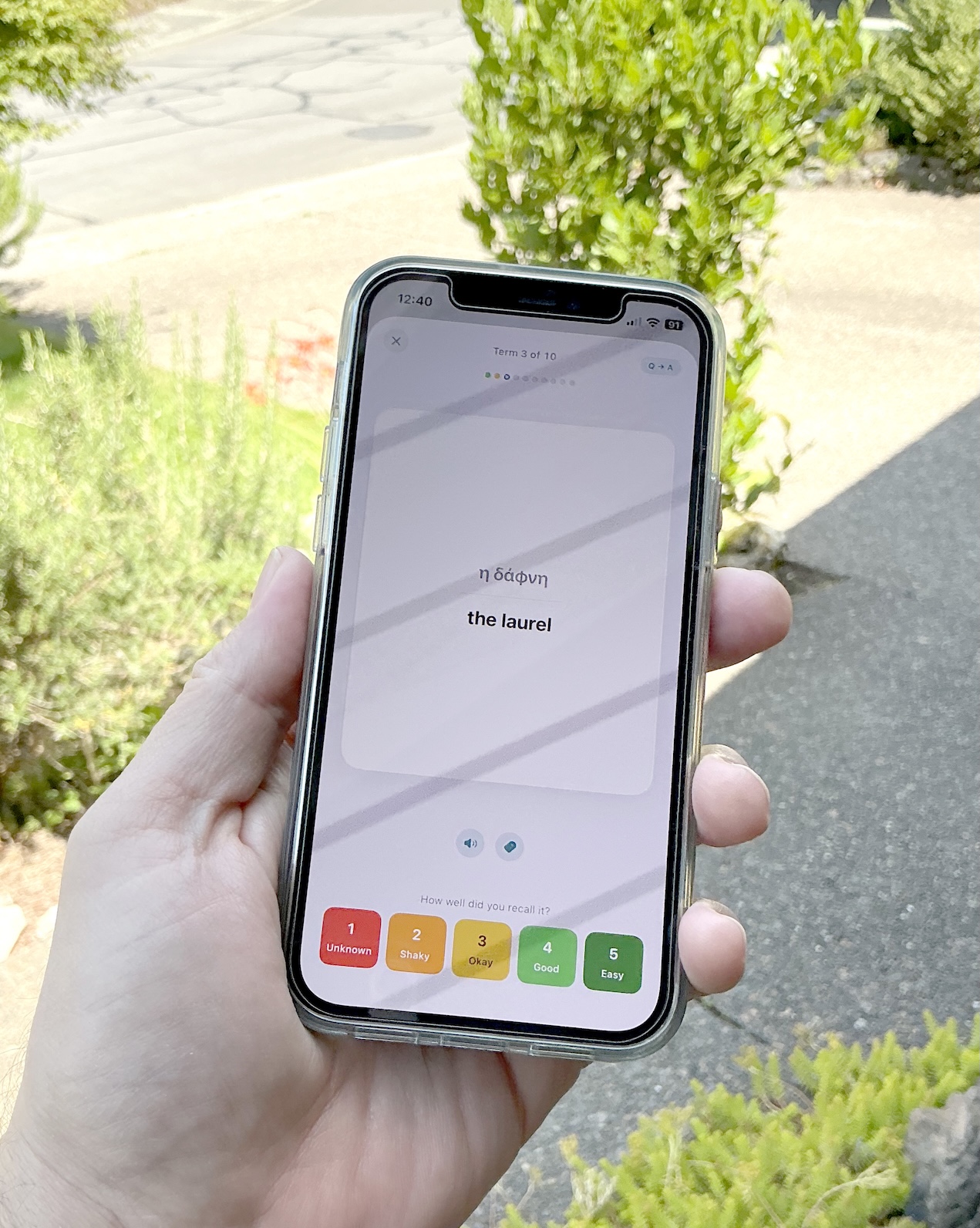
Developing Lexolotl has been a blast — and yes, I’ve run it with a full export of my Greek flashcard database from the old terminal app. It’s also let me build things that only a modern SwiftUI app can do: text-to-speech to hear terms spoken aloud, and, on supported devices and languages, Apple Intelligence generating example sentences on device.
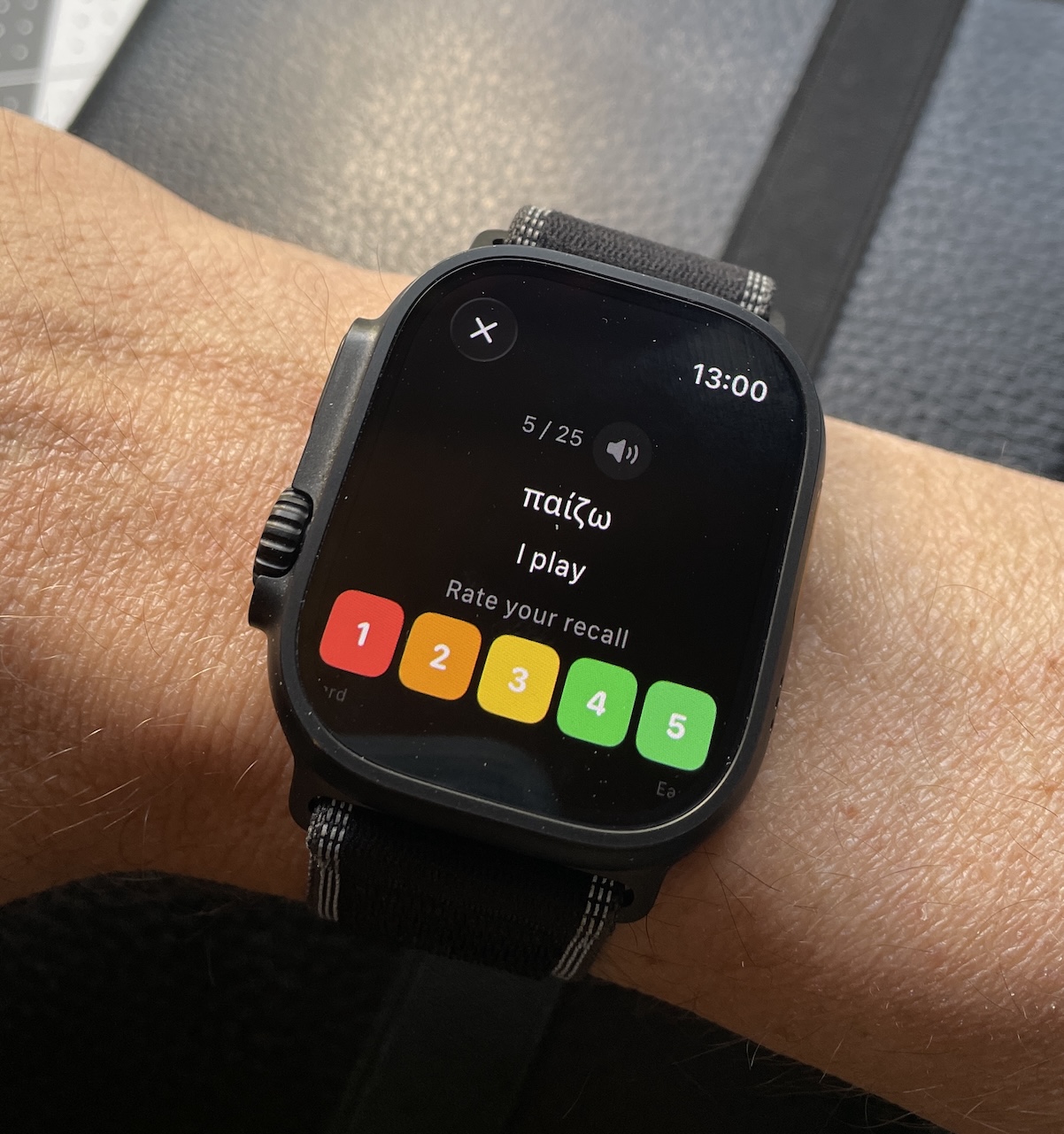
I’m excited for the forthcoming release, and I have even more features planned. But in some ways my favorite thing about the app is how it comes back around to the humble paper flashcard: you can carry it in your pocket, and work on your learning anywhere.
Lexolotl is in beta now and coming to the App Store soon. You can see it — and follow along to the launch — at mathaesthetics.com/wp/lexolotl.